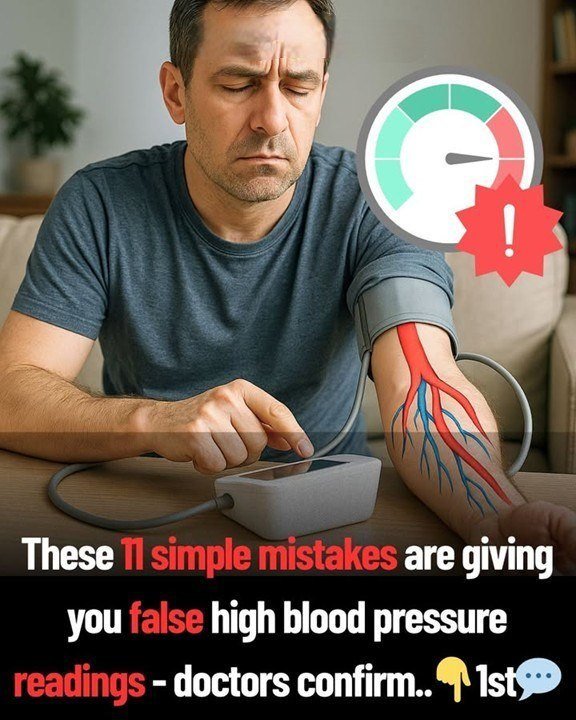
Many people are told they have high blood pressure when in reality the reading was incorrectly taken. Doctors often point out that small mistakes can artificially raise your numbers.
Here are 11 common mistakes that can give you a falsely high reading:
1. Talking during the measurement
Even a short conversation can raise your reading by 10–15 mmHg.
2. Not resting beforehand
You should sit quietly for at least 5 minutes before measuring. Walking or rushing in can spike your result.
3. Full bladder
A full bladder can increase blood pressure slightly—enough to affect accuracy.
4. Incorrect arm position
Your arm should be at heart level. If it’s hanging down, readings can appear higher.
5. Wrong cuff size
A cuff that’s too small can give falsely high readings, which is very common.
6. Poor posture
- Feet not flat on the floor
- Legs crossed
- Back unsupported
All of these can raise your numbers.
7. Caffeine before measuring
Coffee, tea, or energy drinks within 30 minutes can temporarily increase blood pressure.
8. Smoking beforehand
Nicotine causes a short-term spike in blood pressure.
9. Cold environment
Being cold can constrict blood vessels and elevate readings.
10. Measuring over clothing
Placing the cuff over a sleeve reduces accuracy and may increase readings.
11. Single reading only
Blood pressure naturally fluctuates. Doctors recommend taking 2–3 readings and averaging them.
💡 What doctors recommend:
- Sit quietly, relaxed, and upright
- Use the correct cuff size
- Avoid caffeine/smoking 30 minutes before
- Take multiple readings at the same time each day
✅ Normal reference
For most adults, a normal reading is around 120/80 mmHg. Persistent readings above 130/80 mmHg may indicate hypertension.
⚠️ Bottom line:
Before worrying about high blood pressure, make sure your readings are accurate. A small mistake can make a big difference.
If you want, I can show you a step-by-step correct way to measure blood pressure at home so you get reliable results every time.