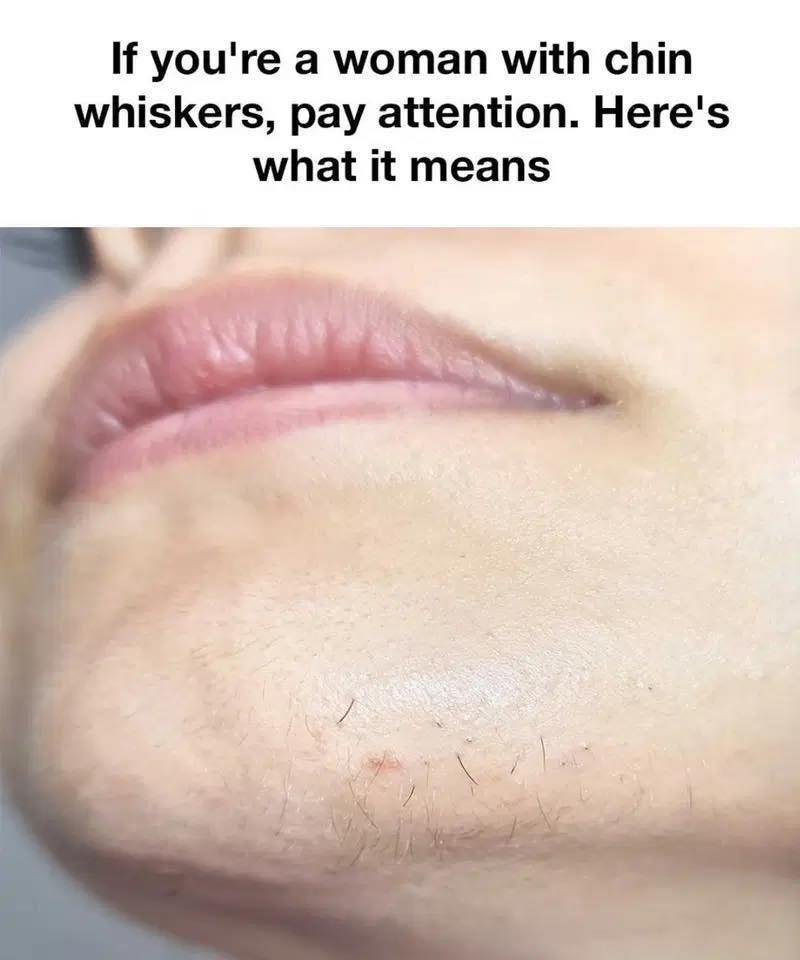
If You’re a Woman With Chin Whiskers, Pay Attention
Here’s What It Can Mean
First things first: chin whiskers are common. Many women experience them at some point in life, and in most cases, they’re completely normal. Still, they can be your body sending a signal worth noticing.
Here’s what chin hairs may be telling you.
🧬 1. Hormonal Changes (Most Common Reason)
Chin whiskers are often linked to androgens (male-type hormones like testosterone), which women naturally produce in small amounts.
You may notice more chin hair during:
- Puberty
- Pregnancy
- Postpartum
- Perimenopause or menopause
Even slight hormonal shifts can cause coarse, dark hairs to appear on the chin or jawline.
🩺 2. Polycystic Ovary Syndrome (PCOS)
For some women, chin whiskers can be a symptom of PCOS, a common hormonal condition.
Other signs may include:
- Irregular or missed periods
- Acne or oily skin
- Weight gain or difficulty losing weight
- Thinning hair on the scalp
Not everyone with chin hair has PCOS—but if multiple symptoms show up together, it’s worth checking with a healthcare provider.
🧠 3. Stress and Cortisol Imbalance
Chronic stress can disrupt hormone balance.
- Elevated cortisol may indirectly increase androgen activity
- Stress can worsen existing hormonal sensitivities
Your chin hair might be one more clue that your body is under prolonged pressure.
🧬 4. Genetics (Sometimes It’s Just Your DNA)
For many women, chin whiskers are simply hereditary.
- If your mother, aunt, or grandmother had them, you might too
- Hair follicles can become more sensitive to hormones with age
In this case, it’s cosmetic—not a health concern.
💊 5. Medications or Supplements
Some medications can influence hair growth, including:
- Certain hormonal treatments
- Steroids
- Testosterone-boosting supplements
If chin whiskers appear suddenly after starting something new, that’s a clue.
✨ What You Can Do
- Track other symptoms (period changes, acne, fatigue)
- Manage stress and sleep
- Avoid harsh DIY hair removal that can irritate skin
- See a healthcare provider if hair growth is sudden, excessive, or paired with other changes
🌸 The Bottom Line
Chin whiskers do not mean something is “wrong” with you. They’re often a normal response to hormonal shifts, genetics, or life stages. Awareness—not fear—is the goal.